
What The Polygamist Teaches Kenyan Businesses About...
Don't run your business like Jonasi Gomora. Build systems, not silos — his empire fell because chaos ruled.
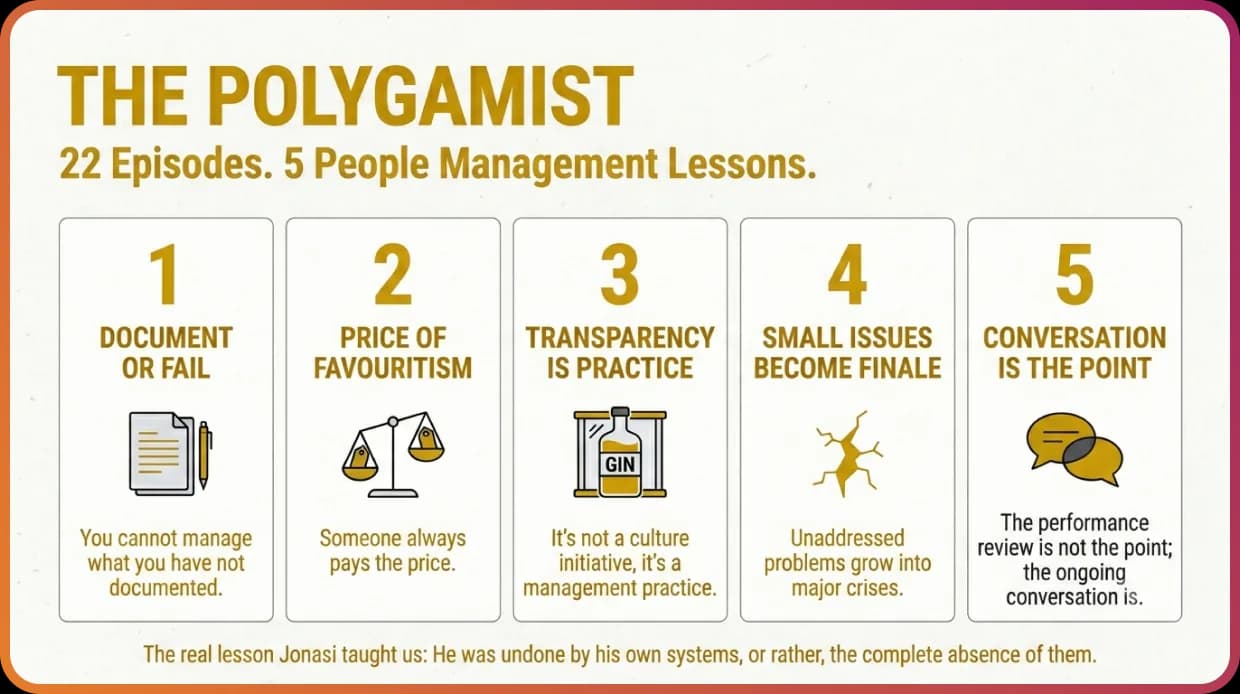
Jonasi Gomora built something big and lost it anyway. Not to a competitor and not to the market — to the fact that no two parts of what he had built could see each other.
It is a familiar shape for a growing business. Each unit works, each manager is competent, and yet the whole thing becomes harder to run every year. The problem is rarely effort. It is that the business is held together by individual memory instead of by a system.
1.Silos are a growth problem, not an IT problem
A silo is cheap when you have one branch and expensive when you have five. The cost is not the duplicated spreadsheet — it is the week it takes to answer a question that should take a minute, and the decisions that get made without waiting for the answer.
2.Build the system before you need it
The instinct is to wait until the business is big enough to justify the investment. By then the workarounds have hardened into process and migrating them is the hard part. The businesses that scale cleanly put the system in slightly before it hurts.
- Agree one definition of your core records — customer, product, branch — and hold it everywhere.
- Move the highest-friction process onto it first, not the easiest one.
- Give managers their own numbers so reporting is not a request to head office.
- Retire the spreadsheet once the system is trusted, rather than running both indefinitely.
Build systems, not silos. An empire held together by one person's memory only lasts as long as that memory does.
Gomora's failing was not ambition. It was that he never made his business legible to itself. Every business that intends to outlive its founder eventually has to.
1 comment
- Peter Kamau
"An empire held together by one person's memory only lasts as long as that memory does" — putting this on the wall of our ops room.